

The Invite
2026

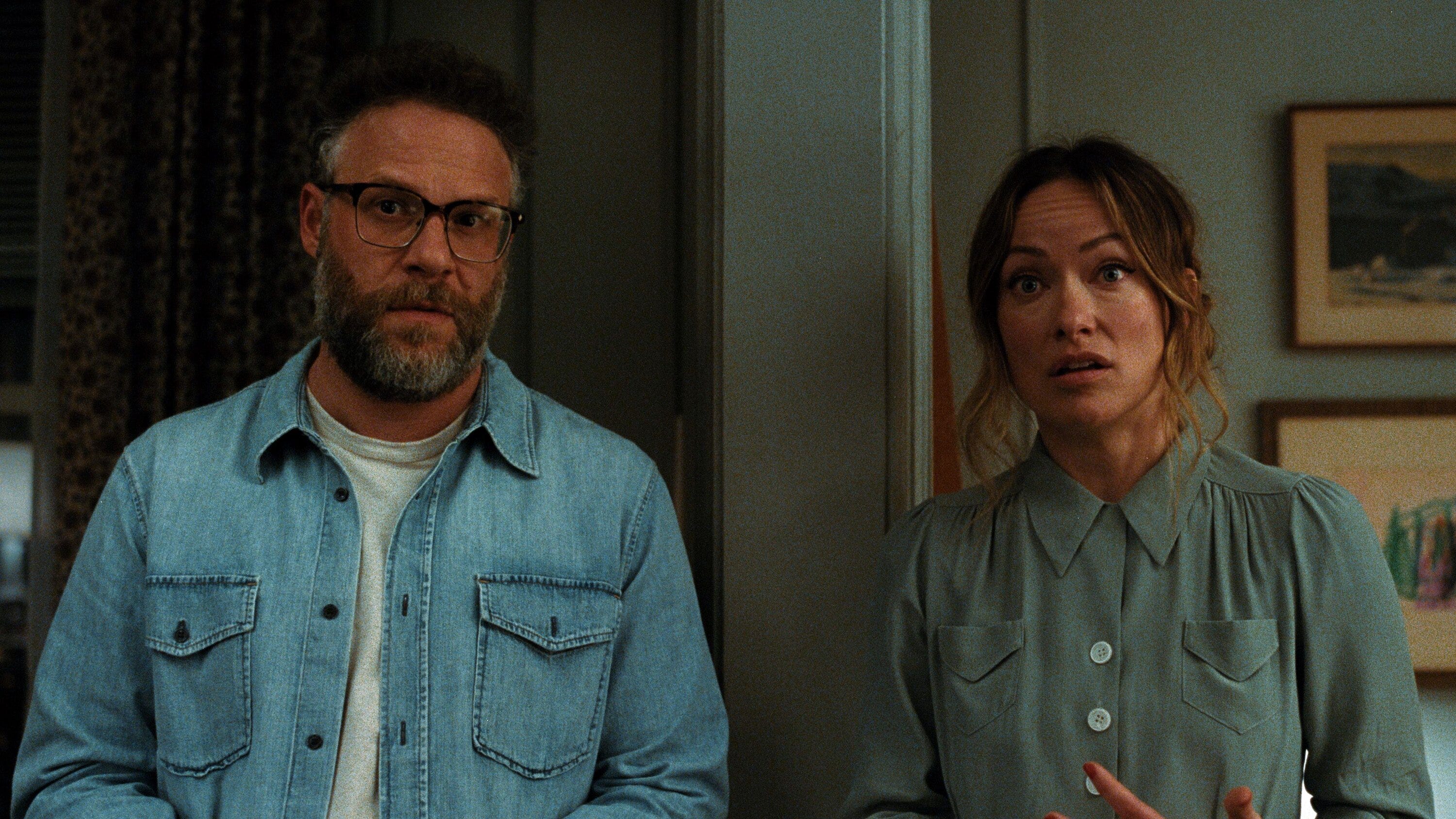
The concept certainly isn’t original, nor is the structure new. We’ve famously tread this ground before with, for example, Edward Albee’s A Delicate Balance and Who’s Afraid of Virginia Woolf? A cult favorite of mine (my own cult, membership: one), 2015’s The Overnight (so overlooked), seems almost as if it has to be based on the same Spanish play, although it also debuted in 2015. And yet, The Invite (in theatres now) manages to feel fresh and fun.
The premise has very little to do with that: a frustrated middle-aged couple hosts their new neighbors for the evening, only to discover that their guests are swingers, who come with a very special invitation. No, the credit goes to the script by Will McCormack and Rashida Jones and its interpretation by the talented cast of Seth Rogen, Olivia Wilde, Penelope Cruz, and Edward Norton. Both of those aspects are handled with a surprising breadth of emotion and a keen handling of the laugh of recognition. Congratulations are in order for Wilde, especially, who redeems her directing career after one hit and one flop with a third film that is destined for Oscars recognition. The use of the cameras always adds to the discomfort, either trembling in extreme but unflattering close-ups or seeming to peep through windows and hidden corners with voyeuristic verve.
While there is little in the film’s worldview to recommend it—”be supportive of the so-called sexual deviance that people require in order to retain their youth and dignity”—the actual content doesn’t rise to the level of its seeming promises. There is no nudity or actual sex, but the latter is talked about constantly and the audience is repeatedly invited to objectify the actresses. (I am truly surprised to find this feminist director making such use of the ol’ male gaze while allowing the men to remain clothed—except for some circumstantial humiliation based on Rogen’s apparently humorous body.)
Accepting the lack of any morality, however, it is easy to view the film as a comedy of errors grounded in the very real travails of long-term monogamy. Wilde and her sexologist advisor term this cooling of physical passion “bed death” in promotional interviews, and the solution suggested is basically divorce for the sake of the children. At the last minute, a little hope is offered for our protagonists’ marriage when Cruz’s therapist character explains that our lives are a series of finite relationships, but that it is possible to establish one’s next relationship with their existing spouse. There is a little wisdom here, recognizing the need for partnerships to permute alongside the inevitable changes of the people involved over time. The rest of the film’s therapy banter is predictable sophistry, but there is no question of the movie’s watchability. Both the realistic relational dynamics and cringingly familiar situational comedy are solid.
If this type of content is amenable to you, you are bound to have a great time at The Invite. If not, listen to your Spirit-led conscience and don’t engage.