The Grifters
1990
Stephen Frears’s 1990 film adaptation of Jim Thompson’s pulp novel, The Grifters, might not show its true identity right away, but it’s a long con well worth falling into. Thompson is (in)famous as the preeminent pulp novelist of American soullessness. His is the world that has given rise to an entire genre of entertainment, from Sin City to Pulp Fiction. Undoubtedly neonoirs, his novels exist on a separate level of corruption, sex, and betrayal. His big swings and rug-pull moments swirl in a lurid world of sudden, all-too-real violence and a stylized flavor of nihilism that lays bare the empty core of the American Dream.
If you know Frears as the director of such films as The Queen and Florence Foster Jenkins, he may not seem like the correct choice for working with such grim—and essentially American—material. At the time, however, he was fresh from making a splash with his film of Dangerous Liaisons, and the trip from Valmont and Merteuil to the blackhearted trio at the heart of The Grifters is almost entirely one of time and place. Producer Martin Scorsese selected him for this project, and it was clearly an inspired choice.
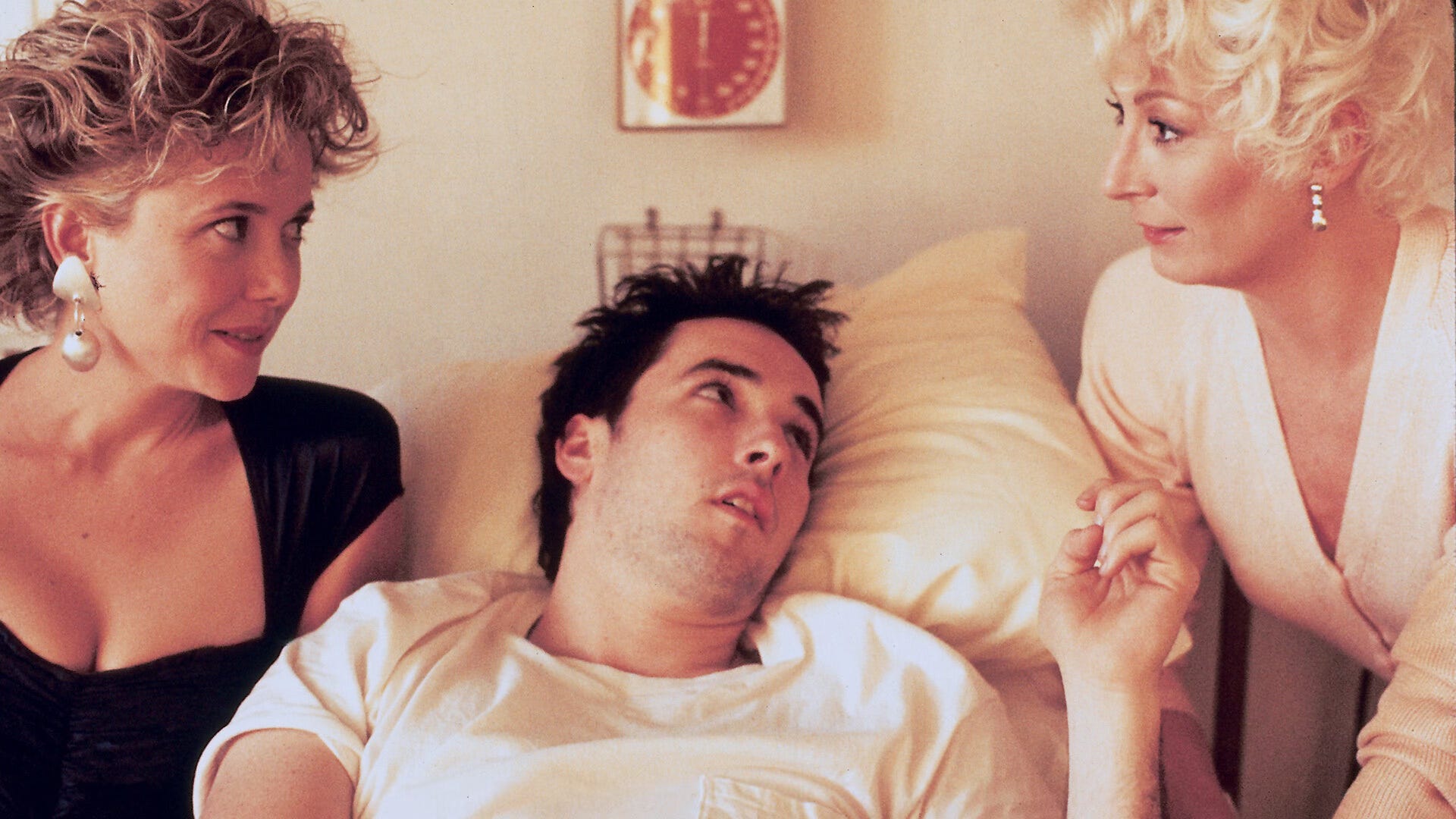
The novel existed in a mid-twentieth-century Los Angeles, and even though the film moves the action to a vaguely contemporary setting, it maintains all the dangerous glamor of Lauren Bacall and Gloria Grahame. In fact, it would be hard to find better analogues for Angelica Huston and Annette Bening here than those two noir icons. Both actresses put in what very well may be their absolute best work as sparring femmes fatales conniving over the soul and body of John Cusack’s small-time conman. Cusack is good, but, at 23, he can’t always put over the work’s hardboiled dialogue with the necessary style. (And the script—much taken verbatim from the novel—is a real highlight of noir poetry.)
The film begins with a series of quick and distinct tonal shifts. First, we get an oddly unnecessary epigraph from “The Lady Is a Tramp,” and then an overpowering blast of Elmer Bernstein’s score that suggests the most dire drama. Just as suddenly, Scorsese’s voice gives a tonally displaced two-sentence voiceover about racetrack betting before the score shifts into an impish theme that cries “comic caper!” And, indeed, for the first act, that’s exactly what it seems like we’re watching, as Frears pulls out all of the comedy in the establishing events. It’s all ice-cool Danny Ocean energy until we see Huston’s jarringly visceral reaction to the arrival of her mob overlord. What follows is as harrowing and effective a scene as any I know, in which Huston’s elegant self-possession disappears in an instant, creating a true sense of terror about what may be about to happen. And then it happens. And that’s the first time The Grifters tips its hand, answering the ricocheting tones of its opening with a definitive landing on the side of menace, violence, and unpredictability. Still, we may be lured into the lighter tone again by the bright colors, Bening’s hilarious Marilyn Monroe schtick, and the sheer desire that levity will win the day. But it’s a con, people. Everything is a con.
The film contains several shocking outbursts of abusive violence that signal the plot’s unraveling (through the unraveling of its characters), but it manages to top itself in the arenas of surprise and deadly betrayal again and again, before leaving us on the perfect visual equivalent of the novel’s chilling final sentence: “And then she went out of the room and the hotel, and out into the City of Angels.”
And if that doesn’t pull you in, come for the astonishing visuals that simultaneously celebrate and mock the dream-quality stylization of noir films. The exact color of a wig. The cut of a dress. The threatening stillness of roadside motels. It’s all perfectly calibrated for maximum cool. And still, Frears manages to make visual jokes and overt callouts to films like Psycho without upsetting the precarious tonal balance of the film.
(Did I just talk myself into a full five-star rating?)


