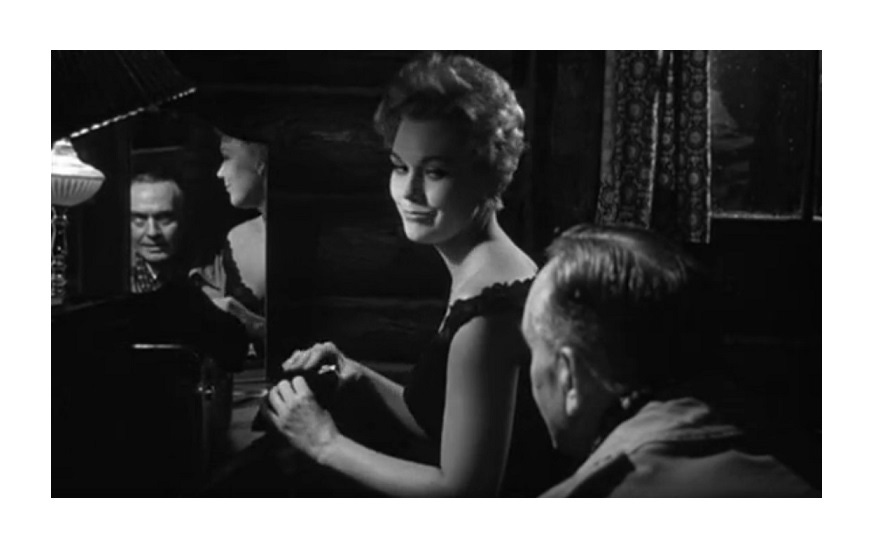
Middle of the Night
1959
Paddy Chayefsky. The greatest screenwriter in history? Maybe. His name is enough to make me watch a movie. (And here, Frederic March’s name seals the deal. No other actor could do this so well!)
In the hands of any other writer, these characters would have clear feelings that they and we understood perfectly. Like every film. You would be able to boil a character down to a motivation. And we are used to it. We love it. We revere it. We expect it. Because it looks like life; it sounds like life; but it’s not. We don’t want to watch life because we have to live it.
And then, Chayefsky comes along with a script so full of the unidentifiable realities of life, and I realize that this is what I want. I just don’t believe anyone is able to write it. Paddy Chayefsky.
Everything—every word—in this film rings true, but rings as if we ourselves were the bell. And we are shaken and swung and collide with the same hammer over and over again. And all the while, what beautiful sounds those impacts make!
These characters don’t know what they feel, what they think, or what they want any more than we do. Sure, for a day, for a minute…but we change immediately and reach for the thing we say we hate and stomp on the things we say we love and listen to the people we call liars. And, as March’s character says toward the end of this wonderful movie, “Love’s a shabby business, but it’s all there is.” The distance from “loving” to “living” is just “I”, just a personal interiority of the experience. And living is such a shabby business. And it really is all there is.
And yet it’s so hard! Just watch these people try to speak kindly, try to be truthful, try to react honestly. When they succeed, it is just as ephemeral as when they fail. We strain and grope and sometimes grasp who we are and what we want. And it’s as shabby as anything. But why escape from it? It feels so shameful to contradict yourself every other sentence. But everyone is doing it, just as we are.
And we feed on simplified narratives that rely on constant—if complex—characters. And we begin to believe it is life. And we nail motivations to actual humans. And we assign unchanging opinions to the image-bearers of God. And we pretend to know who we all are. The wind blows. The grass fades. An unfaithful people spins and collides.
And Paddy Chayefsky takes dictation.