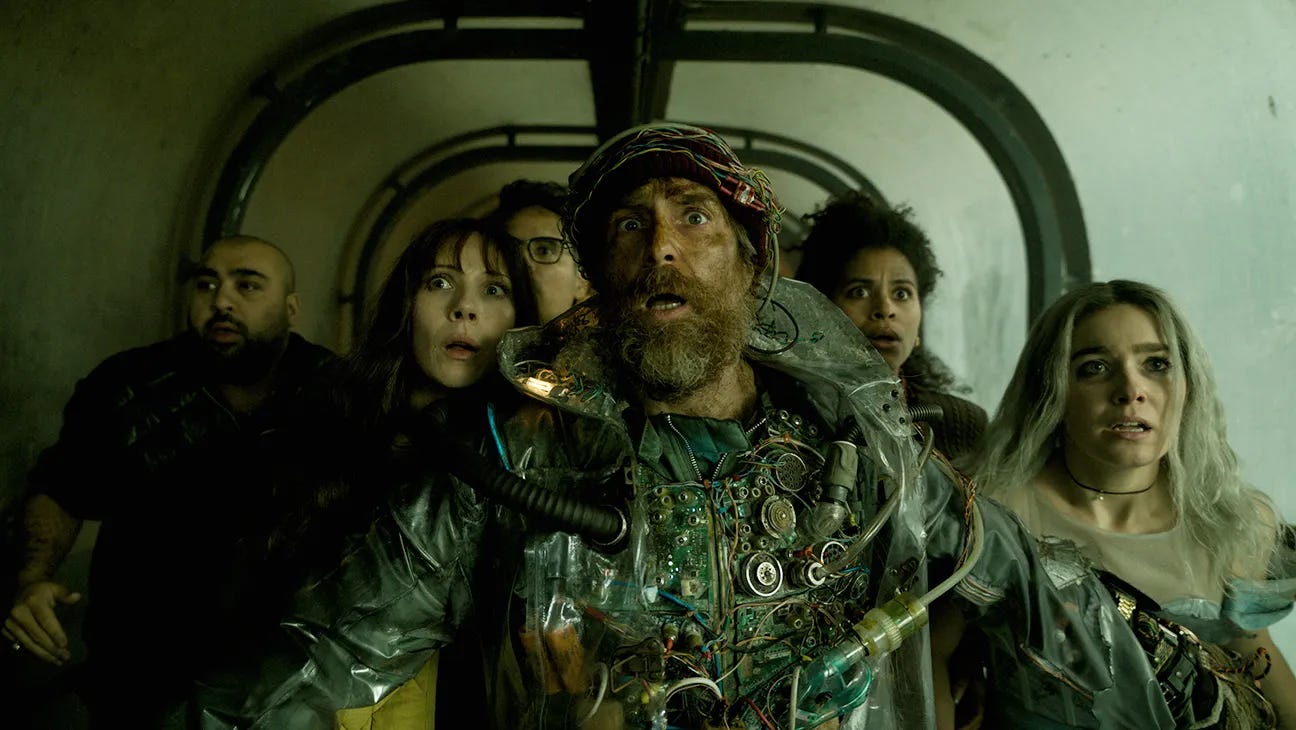
Good Luck, Have Fun, Don't Die
2026
Director Gore Verbinski made his name with films like Pirates of the Caribbean and The Ring, but he has been heading in a different direction lately, starting with his 2016 film, A Cure for Wellness—a direction he now takes to absurd extremes in his latest: Good Luck, Have Fun, Don’t Die.
Good Luck… is another entry in the hot genre of Gonzo Cinema, which took off with Daniels’ Everything Everywhere All At Once’s historic Oscar haul. I have brought the topic up recently in these pages, most fully in my review for I Love Boosters. While I have not seen any name put to this style of film—now flooding arthouse cinemas—I think the appropriation of Hunter S. Thompson’s journalistic label is exactly correct. Merriam-Webster defines “gonzo” as “outlandishly unconventional, outrageous, or extreme,” and that pretty much sums up this burgeoning style of filmmaking, in which writers and directors steer into the skid of oddity in order to reflect an increasingly grotesque world. This year has seen the stylistic children of Daniels reach American audiences in such films as The Bride!, They Will Kill You, and the aforementioned Boosters. You can also clearly see its impact in the current crop of horror films, things like Weapons and Backrooms, as well as in other indie releases such as Mother Mary, Is God Is, The Testament of Ann Lee, and the films of Yorgos Lanthimos.
Verbinski’s film is the perfect vehicle for this unhinged, manic filmmaking, in that it is about the absurd alteration of our world and lives by screen addiction and AI. The basic plot involves Sam Rockwell’s unnamed time-traveler on his 118th trip back to a diner in our near future. He knows (we don’t know how) that among the patrons in the diner that night is the perfect combination of people who can help him save the future in the next hour. After collecting his volunteers and recruits at random, he leads them on a three-block journey that gets progressively weirder and more deadly, leading to a crazy climax.
By now, this is exactly the type of role I expect to see Rockwell in…and he’s as good as always. It is a few of his ad hoc soldiers who really get the juicy plotlines and put in showstopping performances, though. Among these are Michael Peña and Zazie Beetz as romantically involved teachers. It is in their flashback sequence that things begin to move from “wacky time travel film” to something much stranger and more interesting. Those unsettling (and hilariously dead-on) parodic elements accelerate when we are privy to the flashback of a single mother played with devastating vulnerability and wit by Juno Temple. By the third flashback, we are prepared for anything—or are trying to be. But the absurd swerves this film makes are not really anything you can brace yourself for. This flashback stars Haley Lu Richardson, who has carved out a small specialty for herself in bringing the perfectly-tuned shoe drop to independent films. (Since her work in Columbus and After Yang, I have been impatiently waiting to see her spread her wings further, and this is that moment.) From then on, even as things spiral out of sense and control, the film’s themes and story start coming together.
I really want to throw spoilers to the wind because there are so many doozies, but I don’t want to lessen the experience of even one person who chooses to watch this film (newly streaming on Hulu). It’s safe to say that Verbinski’s film comes at you from every angle imaginable…and unimaginable. But this is not weirdness for weirdness’s sake. This film is asking all the right questions about what technology is doing to us and our world, and seeing these issues played out on such a ridiculous scale makes them more troubling than ever. (Just wait for the squirmy subject matter of Juno Temple’s subplot!) It is a smart script that knows better than to scapegoat tech and bravely looks beyond its direct effects to larger cultural trends.
Yes, it’s another great film about the downheaval of the Western world. And this makes me so happy! It is not only a sort of duty for the artist to scream a warning about their specific time and place, but it is almost impossible for them not to. Artists create out of the terror and ecstasy that they are processing in their own heads and hearts. It is inevitable, then, that what comes out reflects what the artist sees/fears in the world around them. I have been disheartened by the dearth of movies expressing our current societal clenching-for-impact. In the last few months, they have been rolling out, though, and any subject that art is faithfully discussing has a real chance of missing the wall. There is hope in the mere existence of this violent, crazy, funny, disturbing film. And I am in dire need of that kind of hope.